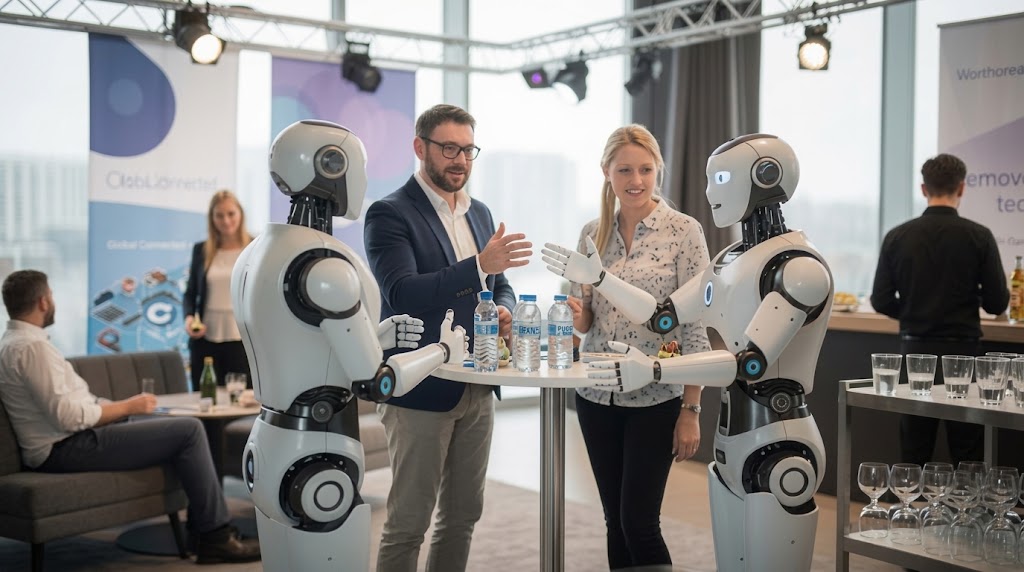
Are you organizing an event and want to maximize its visibility? Event communication is essential to ensure its success. In this article, we will explore effective strategies to promote your corporate, internal, and B2B events. You will discover how to choose the right communication channels and use the appropriate tools. Whether you are a novice or experienced, these tips will help you achieve your goals. Learn to engage your audience before, during, and after the event. Turn your participants into ambassadors and boost your visibility. Follow the guide for successful event communication.
Event Communication: Adapt Your Actions Based on Your Event
Event communication is a key element in ensuring the success of your events. Whether you are organizing a product launch, a conference, or a B2B trade show, it is crucial to adapt your actions based on the nature of your event. A well-thought-out strategy allows you to effectively reach your target audience and optimize your budget.
Each type of event requires a specific approach. A corporate event will demand a different communication style than a public event. Understanding the particularities of your event will help you select the relevant tools and channels to maximize your impact.
Moreover, anticipating the needs of your audience will allow you to create impactful messages that resonate with your participants. Tailored communication fosters engagement and participation, contributing to the overall success of your event.
Boosting Corporate Event Communication
To promote a corporate event, it is essential to diversify your communication channels. Paid advertising, press relations, and sharing on social media are effective means to increase the visibility of your event. Email marketing remains a powerful tool to directly reach your professional contacts.
Word-of-mouth is often an underestimated but extremely effective method. By engaging your stakeholders, such as your employees, speakers, and partners, you can turn these actors into true ambassadors. Their shares and recommendations will increase the reach of your communication and attract more participants.
To go further, consult our Complete Guide to Succeeding in Affiliate Marketing on Social Media, which offers detailed strategies to boost your communication.
Communicating About Internal Events
Internal events play a crucial role in strengthening team spirit and motivating employees. Effective communication is essential to ensure active participation. Informing your employees about logistical details such as the location, date, and schedule is the first step.
Beyond information, it is important to create a sense of excitement and engagement around the event. Use channels like email marketing, intranet, or internal communication platforms to share motivating and unifying messages.
The digital realm offers many possibilities for conveying your messages. Engaging videos or personalized newsletters can also enhance interest and participation among your employees.
Promoting a B2B Event
The promotion of a B2B event requires a specific approach focused on building professional relationships. Unlike B2C events, the main objective is to create networking opportunities and demonstrate the added value of your products or services. It is essential to target decision-makers and adapt your messages to their specific needs.
Incorporating relevant data and figures into your communication will bolster the credibility of your event. Potential participants will be more inclined to register if they perceive a real added value in attending.
Also consider collaborating with influencers or thought leaders in your industry. A strategic partnership can significantly increase the reach of your event and attract a qualified audience.
The Key Steps to Promote Your Events
Promoting an event involves several key steps: before, during, and after the event. Each of these phases requires targeted and adapted communication.
In advance, launch a preventive communication campaign to create anticipation. Use teasers to generate interest and inform your audience about practical details. A well-established timeline will help you organize your actions effectively.
On the day of the event, maintain engagement in real-time through updates on social media and encouraging participants to share their experiences. After the event, capitalize on the success by sharing highlights and gathering feedback from your audience to improve your future events.
How to Promote Your Corporate Event in Advance
Promoting your event ahead of time is essential to ensure good participation. Start by clearly defining your objectives and target audience. Use teasers to spark curiosity and showcase the highlights of your event.
Disseminate practical information such as the date, location, and registration procedures. Clear and regular communication will help your future participants prepare and engage fully.
To structure your campaign, develop a timeline with all necessary tasks and deliverables. A rigorous organization will allow you to cover all aspects of promotion and optimize your efforts.
Promotion on the Day of the Event
On the day of your event, it is crucial to continue promoting your event despite the numerous tasks to accomplish. Communicate in real-time on social media to maintain engagement and attract the attention of non-participants.
Encourage participants to share their experiences using a dedicated hashtag. If your event is hybrid or digital, ensure that you also highlight remote participants by providing interactive content.
Tools such as email newsletters can be used to share updates and engage your participants throughout the day.
Why Communicate After Your Event
After the event, it is important to maintain momentum and capitalize on success. Publish highlights and major announcements to revive the memory of your event. This helps to strengthen the relationship with your participants and prepare for your future events.
Gather feedback from your audience to evaluate the success of your event and identify areas for improvement. Social media and emails are ideal channels to share this feedback and continue engaging your audience.
Do not hesitate to promote the content generated during the event, such as photo albums, best-of videos, or interviews with speakers. This content enriches your post-event communication and increases your visibility.
Establishing Your Event Communication
For effective event communication, it is crucial to choose the right channels. Depending on your objectives and target audience, some channels will be more relevant than others. A well-defined strategy will allow you to optimize your budget and achieve your objectives.
Social media plays a major role in promoting events. They offer extensive visibility and allow direct interaction with your audience. In addition, tools like Event Management Software (EMS) facilitate the management of your campaigns and centralize your communication actions.
Suitable for different types of events, an EMS can help you manage registrations, create personalized forms, and send targeted emails while ensuring smooth project management.
Social Media: A Challenge in Event Communication
Social media is essential for promoting your event. Platforms like Twitter, LinkedIn, or Instagram allow you to reach a wide audience and create a community around your event. Using a dedicated hashtag facilitates tracking conversations and increases the visibility of your posts.
Live streaming is a powerful feature to engage your participants in real-time. It allows you to offer an immersive experience and attract distant viewers. Integrating live videos into your communication strategy enhances interactivity and engagement.
Additionally, collaborating with influencers can significantly amplify the reach of your event. For example, Meshh unveils its next-generation analytical platform offers advanced tools to analyze the performance of your communication on social media.
Video: Yes, But Why?
Video is an essential medium for promoting your events. It captures your audience’s attention in a dynamic and engaging way. Videos can be used at various stages of your communication, whether to tease the event, cover highlights, or share participant feedback.
In 2022, 78% of internet users watched videos online each week, and 59% of executives prefer to learn through video rather than text. This trend underscores the importance of video in your event communication strategy.
To create impactful videos, follow our Ultimate Guide to Succeeding in Affiliate Marketing on Social Media, where we detail best practices for producing effective video content.
The Role of EMS
Event Management Software (EMS) are essential tools for optimizing your event communication. They allow you to centralize all your promotion and event management actions in one place. With an EMS, you can manage registrations, create personalized forms, and orchestrate your communication campaigns efficiently.
Moreover, an EMS offers the possibility to create a dedicated website for your event, where you can disseminate all necessary information and share your multimedia content. This centralization simplifies not only the management of your event but also your communication strategy.
Consider integrating analytical tools to measure the impact of your actions and adjust your strategy in real-time. Platforms like Meshh Vantage offer advanced solutions to analyze the performance of your campaigns and optimize your results.
Having a single platform for all your needs simplifies your life and also saves time and money. In this article, we explain how to optimize your event communication while saving.
Now that you know all the secrets of a successful event communication, it’s your turn! If you want to go even further and master the art of event management, download our Ultimate Guide for Event Organizers.