
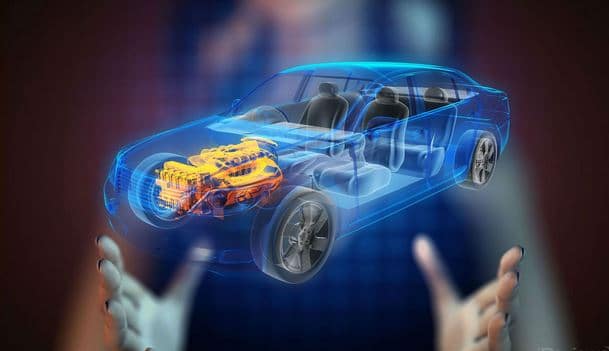

Innovation and interaction are two essential factors for the success of an event, criteria that are perfectly fulfilled by the tactile 3D hologram. To impress your guests, prospects, or clients, follow the guide.
What is expected from a corporate event
A seminar, a strategic convention, a trade show, an open house day, etc., in the events industry, a certain number of results are expected. These can include visibility, customer retention, or client loyalty, all aimed at one final goal: increasing revenue. Undeniably, an increase in notoriety and enhanced visibility contribute to better sales. In any case, a successful event should create a ripple effect, advantageous from every point of view. Therefore, it is essential to captivate the audience and convey a positive image of your brand.
You will understand that an effective strategy consists of standing out and knowing how to impress your targets. By adopting the best communication medium, you will show them that your services are greatly up to their expectations. And hologram animations are foolproof in this regard. In street marketing or similar events, the hologram acts as a true beacon that will undoubtedly attract visitors.
From classic holograms to tactile 3D holograms
Principles of holography
By definition, a hologram comes from a recording process by which it is possible to subsequently reproduce a three-dimensional image. The technique of holography. The diffusion occurs through light beams. The photographic plate undergoes light diffraction when it comes into contact with a 3D object. When illuminated by light beams, it creates the illusion of a three-dimensional image, despite being a completely immaterial projection. The trompe-l’œil effect is fascinating. This makes it an ideal communication medium to wow your audience. With your content floating and moving in the air, you will have no trouble focusing the gaze and attention of your targets on your presentation.
The 2 types of holograms
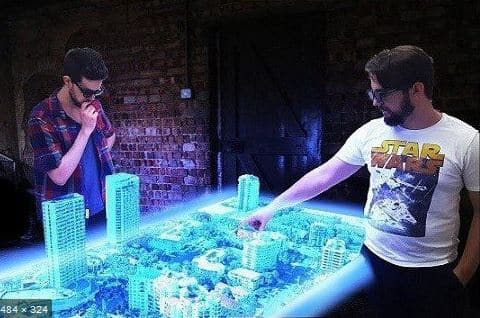
Moreover, with the animation of a 3D image that the hologram allows, you give your audience the chance to discover and appreciate your products from every angle. Operating on the same principle, there are two main categories of holograms. There are those life-sized, which are used on stage to create impossible duets with a deceased star, for example, and the miniaturized holograms, whether in cabinets or pyramidal shapes.
Make the animation more interactive with a hologram that can be controlled using a joystick or tablet. Beyond this, the animation takes on even more significance as technological advancements take us further. How? By allowing a 3D projection with even more realism: the tactile 3D hologram.
Even more realism with the tactile 3D hologram
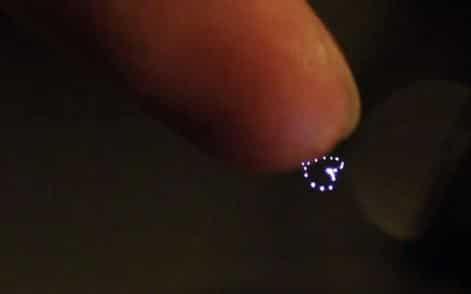
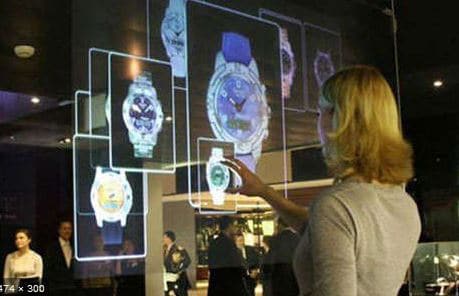
In perpetual evolution, researchers continually strive to perfect holographic technologies. Thus, recent discoveries have allowed a team of researchers from Sussex, led by Sriram Subramanian, to develop the tactile 3D hologram. The technique uses ultrasound systems to project shapes capable of interacting with the audience. This allows them to touch 3D images created by the effect of a simple polystyrene bead. With a speed of 29 km/h equivalent to one-tenth of a second, the choreography of the bead allows it to reproduce the shape of the object.
The human eye cannot discern the bead at such a speed, only the shape it reproduces. Integrated LEDs in the screen then provide the colors illuminating the bead, and the addition of sound effects is not excluded. With the tactile 3D hologram, maximize the profitability of your event by arousing the curiosity of your visitors.


